An academic visit between Italian and Chinese venous specialists brings renewed attention to hemodynamic practice, educational standardization, and the future of international CHIVA collaboration.
From European Origins to International Clinical Dialogue
The continued development of CHIVA is increasingly shaped by interactions between specialists working across different clinical environments and healthcare systems.
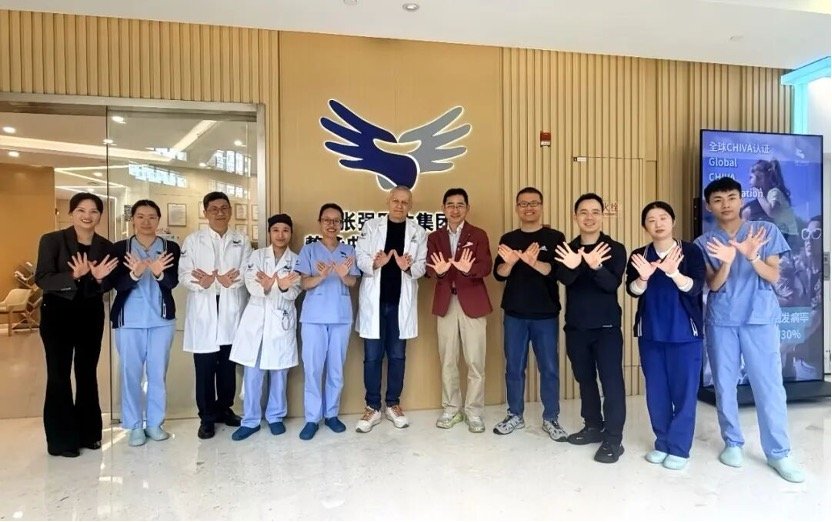
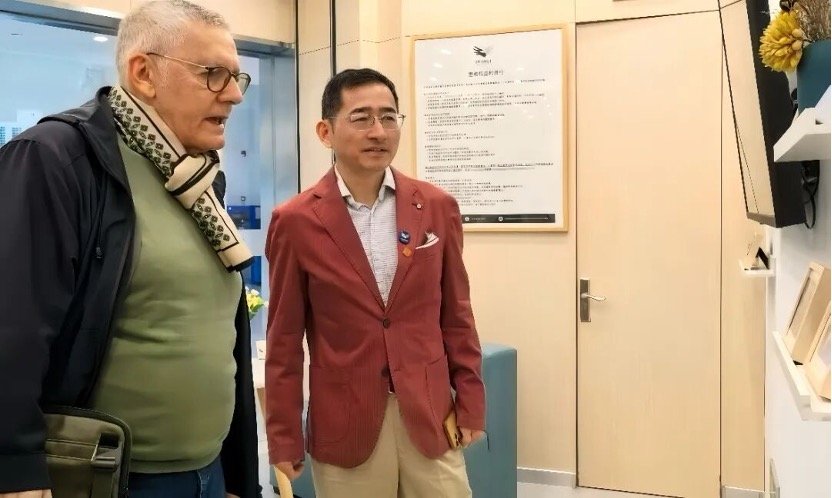
A recent visit by Italian venous specialist Professor Roberto Delfrate to Dr. Smile Medical Group in Shanghai offers a perspective on this evolving international exchange.
Prof. Delfrate, Head of Surgery at Figlie di San Camillo Hospital in Cremona, Italy, and a member of the Academic Advisory Board of the Asian Venous Academy (AVA), visited the Chinese medical group during his participation in an academic conference in Shanghai.
The visit brought together Prof. Delfrate, Dr. Qiang Zhang, and members of the group’s clinical team to discuss venous hemodynamics, CHIVA treatment principles, and approaches to clinical assessment and decision-making.
While professional visits are a familiar feature of international medicine, this exchange is particularly relevant in the context of CHIVA’s expanding educational and clinical presence beyond its European origins.
Why Hemodynamic Thinking Remains Central to CHIVA
Unlike conventional approaches centered primarily on eliminating refluxing superficial veins, CHIVA emphasizes the assessment and modification of abnormal venous hemodynamics while seeking to preserve venous structures where appropriate.
This distinction places considerable importance on diagnostic reasoning, particularly the interpretation of duplex ultrasound findings, reflux pathways, and the functional relationships within the venous network.
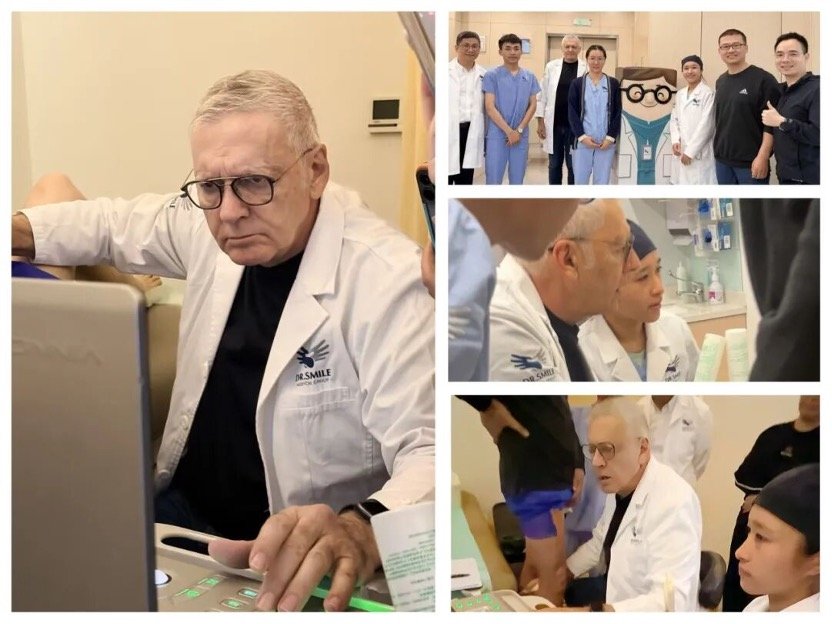
During his Shanghai visit, Prof. Delfrate observed the clinical team’s hemodynamic assessment procedures and participated in discussions involving actual patient cases.
The specialists examined how hemodynamic findings inform individualized treatment planning and how clinical assessment protocols can be refined in daily practice.
Such case-based discussions highlight a central challenge in CHIVA education: the method cannot be adequately understood through procedural techniques alone.
Its application requires a structured understanding of venous physiology, detailed ultrasound assessment, and the ability to translate hemodynamic findings into appropriate clinical decisions.
For the international phlebology community, this raises an important educational question: how can complex hemodynamic reasoning be taught, assessed, and applied consistently across different clinical settings?
Standardization as the Next Stage of International Development
The Shanghai exchange also took place against the backdrop of several academic initiatives aimed at strengthening the educational foundations of CHIVA.
In September 2026, the Asian Venous Academy formally launched the Standardized Chinese Terminology for CHIVA (2026 Edition) in Hong Kong.
The initiative addresses an important challenge in international medical education: the need for consistent terminology when specialized concepts are communicated across languages and clinical traditions.
Prof. Delfrate has contributed to the professional review of the terminology initiative and the accompanying illustrated publication currently in preparation.
He is also serving as a co-editor of the forthcoming Textbook of CHIVA, an academic work intended to organize the method’s theoretical foundations and clinical applications.
In parallel, Prof. Delfrate has been appointed co-editor-in-chief of the planned Journal of Venous Medicine.
Viewed together, these developments point toward a broader effort to establish a more structured academic environment for CHIVA, encompassing terminology, clinical education, scientific publications, and professional exchange.
However, the long-term value of standardization will depend on how effectively these resources are incorporated into training, clinical practice, and continuing professional development.
From Expert Collaboration to Structured International Education
One notable aspect of the Shanghai discussions was the attention given to CHIVA training and certification.
Prof. Delfrate also serves as Chief Medical Advisor to the Global CHIVA Education and Certification Program, an initiative focused on developing a structured framework for CHIVA education.
During the visit, discussions addressed the development of training pathways, educational consistency, and opportunities for collaboration between Chinese and European specialists.
Prof. Delfrate additionally invited Dr. Zhang to participate in the next annual congress of the Italian Society of Phlebology, with a proposed presentation on his experiences as an initiator and promoter of the Global CHIVA Education and Certification Program.
This planned exchange could provide a further opportunity for international discussion on how CHIVA education may evolve from individual mentorship and institutional experience toward more widely accessible, structured learning models.
For such programs, key considerations include the definition of clinical competencies, the quality of hemodynamic ultrasound training, transparent assessment criteria, and the relationship between certification and demonstrated clinical proficiency.
These questions extend beyond CHIVA and are relevant to specialized procedural education throughout venous medicine.
An Opportunity for Broader Scientific Collaboration
The international development of CHIVA presents both opportunities and challenges.
Greater interaction between European and Asian specialists may facilitate the exchange of clinical experience, support educational initiatives, and encourage more consistent approaches to hemodynamic assessment.
At the same time, increased international interest should be accompanied by continued scientific evaluation.
Further comparative research, clearly defined patient-selection criteria, standardized reporting of clinical outcomes, and longer-term follow-up remain important for evaluating CHIVA in relation to other treatment strategies.
From this perspective, the significance of Prof. Delfrate’s Shanghai visit lies not simply in the meeting itself, but in the broader questions it brings into focus.
How can specialized hemodynamic knowledge be transferred reliably across institutions? What constitutes adequate competency in CHIVA assessment and treatment? And how can international educational initiatives contribute to better-quality clinical evidence?
As collaboration between Asian and European venous specialists continues to develop, these questions are likely to remain central to discussions about the future of CHIVA.
For the international phlebology community, exchanges such as this provide opportunities not only to share existing knowledge, but also to examine the educational and scientific frameworks needed to support its responsible application.